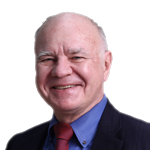


Introduction: Dr. Marc Faber was born in Zurich, Switzerland. He went to school in Geneva and Zurich and finished high school with the Matura. He studied Economics at the University of Zurich and, at the age of 24, obtained a Ph.D in Economics magna cum laude. Between 1970 and 1978, Dr. Faber worked for White Weld & Company Limited in New York, Zurich and Hong Kong. Since 1973, he has lived in Hong Kong. From 1978 to February 1990, he was the Managing Director of Drexel Burnham Lambert (HK) Ltd. In June 1990, he set up his own business, MARC FABER LIMITED, which acts as an investment advisor, fund manager and broker/dealer. Dr. Faber publishes a widely read monthly investment newsletter "THE GLOOM, BOOM & DOOM" report which highlights unusual investment opportunities. A regular speaker at various investment seminars, Dr. Faber is well known for his "contrarian" investment approach. He is also associated with a variety of funds.
Daily Bell: Thank you for sitting down with us today. Please give us some background. Where were you born? Where did you grow up?
Marc Faber: I grew up in Geneva and Zurich.
Daily Bell: You obtained, at the age of 24, a Ph.D. degree in Economics, magna cum laude. What drove you to accomplish such a feat?
Marc Faber: Well, I passed all my classes not because I was particularly bright but because you have to study what is most important to the work you are interested in doing. I also studied economics, and in those days you didn't have to study more than four years, so I was able to finish relatively early.
Daily Bell: For a while, you worked for the famous White Weld & Company Limited that caused the paper crunch.
Marc Faber: I started with White Weld in 1970 and then in 1978 they were taken over by Merrill Lynch and then I worked for Drexel Burnham.
Daily Bell: You worked in New York City, Zürich and Hong Kong. What was that like?
Marc Faber: In the early '70s, New York was the leading financial center. When I moved to Asia in 1973, Asia was still very poor. Countries like Taiwan, South Korea and Singapore had very poor infrastructure and were still essentially run by "Dictators." I felt, based on the experience and the rise of Japan in the '50s and '60s, that other countries in Asia were going to grow very rapidly, so I stayed on, mostly in Hong Kong and throughout Asia.
Daily Bell: You moved to Hong Kong in 1973, and became a managing director at Drexel Burnham Lambert Ltd. Hong Kong. You were there throughout. Did Drexel get a bad rap? What about Mike Milken? What do you think of Drexel these days?
Marc Faber: Well, I think Mike Milken was a financial genius. I have great admiration for him and his ability to work under enormous pressure. At the end, he had lawsuits, he was defending himself; Drexel Burnham had lawsuits and he was still trading bonds every day. He had unusual abilities to function under very heavy pressure but, obviously, the firm and his department did a few things that were not entirely above board. I wouldn't think, when looking at what has happened in the last few years, he deserved to go to jail. There are many people that committed far larger financial fraud, or at least contributed to irregularities, that have never gone to jail in the last few years or up to this day. The penalty was disproportionate.
Daily Bell: In 1990 you set up your own business, Marc Faber Limited, now in Thailand. Why there?
Marc Faber: I moved to Thailand in 2000. I still keep an office in Hong Kong.
Daily Bell: Who gave you the title "Doctor Doom"?
Marc Faber: Well, I had predicted the 1987 crash and then it happened and then I was predicting in '88 and '89, the crash of Japan. The first person who gave me the name was Nury Vittachi. He was a journalist at the South China Post and an author of several books; he also had a very popular column in the Post, called "Lai See."
Daily Bell: A book written by Nury Vittachi was entitled Doctor Doom – Riding the Millennial Storm – Marc Faber's Path to Profit in the Financial Crisis. Do you still work with Vittachi? What was the book about?
Marc Faber: The book is a personal account of my life in Hong Kong in the 1980s, but I believe it was published in the early '90s.
Daily Bell: Your company, Marc Faber Limited, acts as an investment advisor, concentrating on value investments. Are there lots of value investments today? Would you elaborate on your investing philosophy?
Marc Faber: I think when we talk about value, there is value in the purchase of certain assets if they are depressed and neglected. I also suppose there is value in selling short if assets are way above what I would call an equilibrium price or way above the trend line price. So, value can be interpreted in many different ways. You cannot be too rigid. I don't think there is a clear-cut definition of what value is and each analyst has to decide for himself where he finds value.
In general, value will emerge when things look bad for a corporation or a country or an industry, because market prices will fluctuate more than the fundamentals. In other words, if you look at the price of gold and you look at gold shares, the gold shares will be more volatile than the gold price. Or look at the price of real estate; the price of real-estate related companies will overshoot and undershoot. Some unusual opportunities eventually arise, either on the short or on the long side.
Daily Bell: You also act as a fund manager to private wealthy clients. What do you recommend to them? Why do they come to you?
Marc Faber: The clients I have now, I have had for 20 years. I haven't taken new clients for 12 years. They come to me because they recognize that I have a slightly different investment strategy than most portfolio managers or funds managers. They are remunerated according to whether they beat the index or not. So, if the index is up 20% and the fund manager is up 22%, he's done a good job. Or if the index is down 30% and he's down only 29%, he's done a good job. My clients are different. They want to see a return every year, even if the return is modest.
Daily Bell: Your current — if eccentric — tag-line is: "Buy a $100 US bond and frame it to teach your children about inflation by watching the US bond value diminish to almost nothing over the next 20 years." Why are you negative about US Treasuries?
Marc Faber: We have to distinguish the short term and the long term. I think about two months ago, I turned quite positive for US Treasuries. But obviously long-term, at less than 3% yield on a ten year US Treasury, I don't see any value. I think that interest rates in time will be much higher because the fiscal deficit will stay very elevated or even increase and that will impair the ability of the government to pay the interest. If the ability to pay the interest is impaired, there's only one way out and that is for them to print money, and so eventually you will get higher interest rates.
Daily Bell: What caused the crash of 1987? Was it caused by a currency agreement between the Reagan White House and Japan? Please tell us about that.
Marc Faber: I am not sure what caused the crash but the market started to go down in August '87. The market had become immensely over bought and there was a lot of speculation and investor sentiment played on one side – the bullish side. So I think a correction was easy to predict and that the crash would happen. As I said, it was an accidental thing, but I had predicted it and then it happened one week later. In other cases, like the NASDAQ or the Japanese market crash, it took longer.
Daily Bell: You predicted the rise of oil, precious metals, other commodities, emerging markets and especially China in your book Tomorrow's Gold: Asia's Age of Discovery. How did you know?
Marc Faber: Basically, commodities move in long-term cycles and they had peaked out in 1980. After 1980, they had been in a downtrend, including oil and industrial commodities. When the incremental demand from China kicked in, it was an easy call to say, "eventually commodities will go up," given a 20-year bear market and they were extremely inexpensive compared to NASDAQ stocks.
Daily Bell: You also correctly predicted the slide of the U.S. dollar since 2002.
Marc Faber: The US has essentially one advantage and that is they issue their government's debt in US dollars. In other words, they have no mismatch of assets and liabilities. So, that's imperative to printing money. When you read the notes and the speeches from Mr. Bernanke, it's very clear that he would rather take the weaker dollar than to have domestic-style deflation. So I think that there are several factors that point to a declining dollar, but I have to say the other currencies are not much better. I would also say the purchasing power of the euro has gone down, along with the purchasing power of the Swiss franc, which has also dropped when we measure what kind of basket of goods we can buy in Switzerland today compared to 10 years ago.
Daily Bell: You said at one point there were no value investments left except for farmland and real estate in some emerging markets. Do you still believe this?
Marc Faber: I think that I was lucky because I kind of predicted the 2008 financial crisis; it took a while until it happened and I was worried about it for a number of years. If someone today would receive a billion dollars, it will be quite difficult to make a lot of money in the next 10 years. I am not saying if he puts the whole billion in gold, maybe gold will go up or if he puts the whole billion in silver, silver will go up. It would be quite risky for an investor to put the billion in one asset. Even if he diversifies, I don't think he will make a lot of money.
I think we had the collapse of the financial system in 2008; the failed institutions and failed system were bailed out by government. Ultimately, governments will fail. The US and Europe will print money, and when everything fails, they'll go to war and then we have the complete collapse.
Daily Bell: You said in 2007 there was going to be a crash, but you also said US equities were only moderately overvalued. Would you tell us more about that?
Marc Faber: The market based on price earnings was not incredibly over valued. What concerned me was the over-valuation in real estate and in financial stocks. The overall market wasn't selling at 80 times earnings, like Japan in '89 or the NASDAQ in March 2000. From that point of view, there wasn't a tremendous over-valuation. What was happening in 2008 was that there was an earnings collapse in the financial sector.
The financial sector accounted at the peak in 2007 for over 40% of S&P earnings and obviously the S&P earnings collapsed. 2008 was not really a financial crisis and we have come out of it. In 2007, there wasn't a huge over-valuation, but there was a concentration of money in the financial sector.
Daily Bell: Do you still expect hyperinflation?
Marc Faber: In my view, the debt level, especially in the US, if we include the unfunded liabilities of Medicare, Medicaid, Social Security and these entitlement programs, is beyond repair. And this will necessitate printing more money. Also, in my view, there is no real political will to address the issues, because who ever would cut entitlements, will not be re-elected. So we have a tyranny of the masses.
Daily Bell: Did you miss the stock market rally of the last two years?
Marc Faber: No. As I said, I felt positive in March 2009. Starting about a year ago, I became more cautious. Since February of this year, I am kind of concerned that the market is building something more significant than just a short downturn correction. This is a distribution phase and for the market to make a new high, above the recent high, will be difficult.
Daily Bell: What has been your position on gold and silver? Do you expect the purchasing power of either or both to go higher?
Marc Faber: I basically focus more on gold than silver, although I am on the board of a company, Sprott Inc., that is identified with a very bullish view of silver. I prefer gold. My view is, yes, I have been positive for gold for the past 10 or 12 years and I could make a case that gold today is cheaper than it was in 1999 when it was at $252. Cheaper in the sense that if I compare gold to international reserves or to the increase in the credit markets in the world, I don't think it's expensive. And yes, I think it will go higher or, expressed differently, that paper currencies will go lower against the value of gold. But this will be an irregular process, and along with this move into US Treasuries and away from risky assets, I wouldn't be surprised if the price of gold went down $200. It's not necessarily a prediction; it just wouldn't surprise me.
Daily Bell: Tell us about your report. Why you named it what you did and how people can get it.
Marc Faber: I have two reports, the written, printed report called the Gloom, Boom and Doom Report, which is relatively detailed and focuses on monetary issues. Then I have a website report which is sent out by email and people can inquire about it on the website, www.gloomboomdoom.com.
Daily Bell: Here is a famous quote: "The federal government is sending each of us a $600 rebate. If we spend that money at Wal-Mart, the money goes to China. If we spend it on gasoline it goes to the Arabs. If we buy a computer it will go to India. If we purchase fruit and vegetables it will go to Mexico, Honduras and Guatemala. If we purchase a good car it will go to Germany. If we purchase useless crap it will go to Taiwan and none of it will help the American economy. The only way to keep that money here at home is to spend it on prostitutes and beer, since these are the only products still produced in US. I've been doing my part." Is this really true?
Marc Faber: Actually, beer is now mostly owned by foreign companies. In reality, America still has a very large manufacturing base and we shouldn't underestimate that; there are some very good companies in America. At the moment, it's meant as a joke. But it is true that the problem of America is consumerism. By encouraging this leverage on the consumer level, particularly in the housing market and on credit cards, which is the worst, America has lent to a consumer economy and an economy that doesn't spend enough on investment.
Investments are infrastructure expenditures. They are expenditures for education, research and development, and plants and equipment. A lot of money has been channeled into wasteful government administrations. The smaller a government is, the more dynamic the economy will be and the larger the government is, the more stagnant the economy will become.
There are exceptions to this rule. The Nordic countries of Norway, Sweden, Finland and Denmark, have very large governments but I suppose in small countries, you can run the country like a country club where people essentially develop solidarity and say OK, we pay high taxes – but we have very good health care; OK, we pay high taxes but we have very good schools for our children. So let's say in Norway and Finland you don't need to send your children to private schools, but in America it would be difficult to send your children to government schools because essentially they are inefficient.
Daily Bell: You serve as director or advisor of a number of investment funds that focus on emerging and frontier markets, including Leopard Capital's Leopard Cambodia Fund and Leopard Sri Lanka Fund. You seem to believe a lot in emerging markets. True?
Marc Faber: Yes. I think the world is in a gigantic transition. The growth will be in new economies, countries like India and China. This trend I think, will be with us for a very long time. It will be a contributing factor to geopolitical tensions because obviously the West will not be very happy to see its super power status diminish relative to the rest of the world.
Daily Bell: Would you say you are an Austrian when it comes to economics?
Marc Faber: Yes, but I think we can't be overly dogmatic in economics because certain things may work for one system and other things may not work in another system and so forth. Economics is a very complex system and is essentially human life and the behavior of humans. So to build one theory around it is probably wrong. Sure I am leaning more to the Austrian school, particularly when it comes to debt cycles. But I have sympathy for the Keynesian approach if, and this is a big question, IF it is implemented properly.
In other words, the business cycles will lead to excursions of prosperity and during these excursions into prosperity the system should build up reserves. Then when the excursion in depressions occurs below the trend line, use these reserves. But the problem with Keynesian economics has been that in the excursions into depression the reserves were always used but were never accumulated in the periods of prosperity, and so you build up larger and larger government debt and print more money; that is the problem. It's the problem of democracy.
Daily Bell: What do you think of Ludwig von Mises?
Marc Faber: I have a high regard for all the Austrian economists, but I also have a high regard for other economists. They made many contributions to the understanding of economics. I have little understanding when it comes to Ben Bernanke because he disregards the entire importance of credit and is obsessive about credit growth. Also Alan Greenspan, I mean, credit expanded much more rapidly in the past 30 years. This is not sustainable. Maybe for 10 years, but not in the long run. That they completely disregard the danger of leverage will always remain a mystery to me.
Daily Bell: Is there a cartel of wealthy banking families that runs the world? Are they located in the City of London? Do they by any chance seek one world government?
Marc Faber: I don't know. I think there are some very important banking dynasties for sure. People sometimes refer to them as the Rothschilds and that they have benefitted from wars – so I am not sure I would want a one-world government. When I compare my life today to the life I had in the '50s and '60s, we have much less freedom. Everything is regulated as the governments have become like a cancer; they keep expanding and regulating and dictating everything. In my opinion, this creates not a very favorable environment in the Western world.
Daily Bell: Is the EU going to collapse? Just the euro?
Marc Faber: This is a political question and it will depend on the political will. The euro in my opinion will weaken against the US dollar in the next couple of months and along with the dollar it will weaken against the price of gold in the long run.
Daily Bell: Is the dollar finished as the world's reserve currency?
Marc Faber: It's not finished as the world's reserve currency; it will continue to exist for a while. But obviously there will be competition and there will be currencies people trust more than the US dollar. I think the US dollar has lost prestige. When I think of the '50s or '60s, the US dollar was worth a lot of money and people trusted the US dollar and also the United States. At that time, it was by far the leading economy in the world; that prestige will continue to be eroded.
Daily Bell: What will take its place?
Marc Faber: That I don't know, but I think in Asia we will have currencies that will be important. I don't think we can have united currencies the way we have the Euro because there are numerous political disagreements from the expansion of the influence of China. Obviously, the Chinese currency will be an important currency in Asia.
Daily Bell: Do you have any thoughts on Real Bills? How about free banking?
Marc Faber: I think the idea that you have different banks issuing their own currencies is not a bad idea. The bank that has a very conservative balance sheet will have a strong paper currency and the ones with a weak balance sheet will have a weak currency. There is some merit between having competition this way, and we have that with currency issued by different governments. Some are more desirable than others, like Canadian dollars, Australian dollars, the Swiss Franc … but that hasn't always been the case. In the US, because of the political process, I have my reservations, I think it's already too late.
Daily Bell: Are you hopeful about the world's economic future in the long term?
Marc Faber: I suppose the world will always develop but that we will always have periods where we have wars and tremendous wealth destruction, or where we have plague and where the population shrinks. I am optimistic about certain issues and pessimistic about others.
Daily Bell: What are you working on now?
Marc Faber: Every month I am writing my report, so I am always working on something. But I am not working on anything new or writing any books because I don't have the time. I will again in the future.
Daily Bell: Thank you for your time and a very interesting interview.
This was a lot of fun. You have to read the interview closely, but if you do, you may start to sense a kind of musical quality in the way Dr. Marc Faber responds. Ask him a question and you get back free-form jazz riff, complete with prices, dates and macro- and micro-elaborations.
To be Dr. Marc. Faber is to have a head that is constantly processing data, comparing it to other data and putting it into a larger context. You can hear it if you listen. He's like Charlie Parker – "The Bird" – the great alto-saxophone composer. Ask Marc Faber a question and the answer just pours out of him. He may have an eidetic memory – remembering virtually everything about every day, at least as it relates to finance. He sure remembers a lot, specific prices, etc.
Interviewing him, one is reminded again that there are few accidents when it comes to achievement over time. People who have success, especially when it comes to investing, are usually pretty smart. That's not say there aren't plenty of fund managers who ride the market up and then all the way back down, but Faber has been doing what he does for decades and is still in business. He hasn't had the crutch of a big financial firm to support him. For the most part, he's done it on his own.
We found several quotes of his to be most thought provoking. The first one was this: "We had the collapse of the financial system in 2008; the failed institutions and failed system were bailed out by government. Ultimately governments will fail. The US and Europe will print money, and when everything fails, they'll go to war and then we have the complete collapse."
We surely agree!. We've written over and over that the dollar-reserve financial system basically died in 2008. The Federal Reserve and other central banks have by now apparently handed out tens of trillions in low-interest loans and outright "investments."
In fact, we've estimated that this financial "crisis" will eventually result in an aggregate of US$100 trillion being injected into the West's "free-market" economies by central banks and fiscally, too, before this current episode of fiat money insanity trickles to a close. Invest US$100 trillion into ANYTHING and you are basically re-setting the system, whatever it may be. You are showing, by your actions, that it doesn't exist anymore.
The ramifications are endless. Europe is collapsing. UK and America may be next. Unlike Dr. Faber, we expect China to collapse as well. Doesn't matter about the region or the cycle. China's financial system is Western – actually worse than Western. We don't believe you can trust a single Chinese number at this point. They're building empty cities and ghost highways throughout that vast country.
China is an inflationary accident ready to happen. We'll be surprised if the landing is soft. If it IS hard, like a bowling ball, it will knock down a lot of other economies as well. Europe is already teetering. America is on the brink. Japan is savaged. Imagine what a crash in China will do to Western economies.
If China does crash, or even if it doesn't, the US dollar reserve system is pretty much finished. Something else is in the air. Something else is destined to take its place. The "crisis" shows no sign of receding in our view; in fact, doubtless there will be more financial stimuli as time goes on. None of it will be any more effective than what has gone before.
The only solution, as Dr. Faber says (and as we regularly write), is war. And war is what we are starting to get. There will be more of it. Nothing else will suffice. The elites are desperate to retain their seat at the head of the table. Let chaos reign.
This brings us to the other quote we found interesting. Dr. Faber seems positive about John Maynard Keynes, a Fabian Socialist and Bloomsbury member who believed that the implementation of economic leveling was to take place via trickery in order to maintain the current system with its elite beneficences.
We differ. As believers in free-market thinking, we can't conceive that government interventions into the marketplace EVER result in anything good. In fact, this latest crisis shows once again that Keynes' approaches are basically bunkum. It is impossible for bureaucrats to save up currency in the "good" times to anticipate the bad ones. It's like asking a heroin addict to build up a stash in anticipation of scarcity. Won't happen.
But let us not quibble. We return to our fundamental observation that, like a great musician, Dr. Faber does what he does because he CAN – perhaps unconsciously. He makes market calls within a week of their occurrence. He turns a profit when others do not. He talks at one point about sensing where the market is headed. This is certain kind of talent. Investing as an art form.
It's interesting to listen to. Read between the lines and you may come to the conclusion as we did, that he's holding back in a few places. A smart guy. Success, no accident.