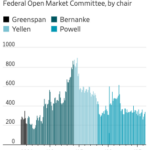
Secret Fed Loans Gave Banks $13 Billion … The Federal Reserve and the big banks fought for more than two years to keep details of the largest bailout in U.S. history a secret. Now, the rest of the world can see what it was missing. The Fed didn't tell anyone which banks were in trouble so deep they required a combined $1.2 trillion on Dec. 5, 2008, their single neediest day. Bankers didn't mention that they took tens of billions of dollars in emergency loans at the same time they were assuring investors their firms were healthy. And no one calculated until now that banks reaped an estimated $13 billion of income by taking advantage of the Fed's below-market rates, Bloomberg Markets magazine reports in its January issue. – New York Times
Dominant Social Theme: What we need is … Pecora hearings!
Free-Market Analysis: Is the US gearing up for another "Pecora Hearing"? These hearings that began in 1932 in New York and Washington, DC gave us the current nonsensical regulatory regime that the US suffers from (and has exported to the wide world).
Here at the Daily Bell, we have an advantage when it comes to this issue … in that there is among us a writer who spent up to a decade on Wall Street studying the securities industry and such abstruse things as the 1930s Pecora Hearings (and wrote several books on the topic). The study of these hearings and their outcome is what turned him (among others) into a Libertarian (someone who doesn't believe that government has all the answers).
The early 1930s Hearings and subsequent "regulation" were nothing but a gigantic show for the increasingly embittered and bankrupt masses, a sickening display of pandering and abysmal failure dressed up sanctimonious language and hypocritical anodynes. There are few words to describe the malevolent dysfunction of the system that was created.
And now the powers-that-be have likely decided to do it all over again! That's probably the reason Bloomberg pursued its lawsuit – to whip up further indignation against the "system." That's how it looks now, anyway.
We couldn't figure it out, not for more than a year. It was one of those anomalies that you run into in this obscure line of work (analyzing elite dominant social themes). But it's becoming clearer now as this news comes out …
We've been aware of the signals for some time, and have written about them … the whipping-up of sentiment against "Wall Street," the faux indignation of the "99 percent" against the "one percent," the lemming-like statements that "Wall Street" needs to "pay" for its "crimes."
In times such as these, the fingers are pointing at specific Wall Street firms as if they were the problem rather than the Money Power of the power-elites' roster of central banks worldwide. This is ALWAYS the way the top familial elites deal with their difficulties.
Just read a little financial history to see for yourself. Of course, most of this financial history is locked up on obscure library shelves in various university libraries. You can find plenty of bios about Michael Jackson, but try to find a legitimate history of the NYSE. Good luck.
And why is that? Because "they" don't want you to know. Over and over on these modest pages we've written that the real power resides with the power elite and its ability to print money-from-nothing using central banks. These people want to run the world (formally as opposed to informally) and they have created a faux reality we call "dreamtime" in order to facilitate their cause.
Part of that reality includes a kind of rhetorical escape hatch. When this turgid, unstable central-banking system collapses (as it does over and over again) the powers-that-be point their collective finger at their favorite scapegoat: the Securities Industry – especially in America where it is most powerful.
In fact, here is how you can tell an apologist-for-the-system from a freedom-fighter in this "sophisticated" day and age: They will claim the problem lies with Wall Street crookery rather than with the larger system of printing counterfeit money (central banking).
And thus our conclusion as regards Bloomberg. Mike Bloomberg himself is surely a card-carrying member of the elite, isn't he? His firm was given tremendous advantages by Merrill Lynch that initially held 30 percent of his firm and supposedly in return gave him insider prices on long Treasuries from their Desk. That's why people bought his machines initially, as we understand it, not for their "technology."
So Mike does what's necessary to save the franchise, in our humble opinion (the Fed franchise). He even sues to force the US Federal Reserve to open up its books about its 2008 bailouts. (Yes, we know, during the course of the legal action the reporter from Bloomberg who initiated it died of a heart attack but Bloomberg as a corporation persevered).
As a result, we now know that the Fed disbursed some US$13 trillion to American commercial banks! This has caused a firestorm. But watch … The powers-that-be, the manipulators behind this latest elite meme will NOT blame the Federal Reserve. They will chase after the "crooks" on Wall Street.
It would be funny if it were not pathetic. The top men of Wall Street don't fully understand the system, either. They think their elite masters (the tip-top elite families and their enablers and associates) will protect them.
They don't understand yet what is barreling down upon them! They are, in this regard, as naïve as children! Soon they are to pay for their conniving and scheming. They are the metaphorical alibi and they will be sacrificed to make sure that public anger is focused on securities shenanigans rather than on the larger horror of printing money-from-nothing.
That's how all this works. Soon enough (after Obama is reelected – or whomever takes over) the hearings shall commence. America shall be thoroughly disgusted by the crimes committed on Wall Street. Toward the end of the hearings, when the public is fully aroused, Ben Bernanke shall appear before the congressional commission to proclaim his sorrow and shock.
Yes, The Bernank shall explain that he "didn't know" and that the Fed "failed" in its supervisory powers. The congressmen shall be furious. They shall castigate The Bernank. They shall pontificate and perorate. They shall call down the very Hounds of Hell on The Bernank and his incompetence.
And then … they shall give the Fed MORE power to do what it does best – put small banks and small securities firms out of business. For that is all regulation is … a way of creating barriers of entry so that the large firms shall prosper and the small ones shall fall by the wayside.
It has another name as well: regulatory capture. The large, strong businesses capture the regulatory departments by offering their top people lucrative contracts. Then the top regulators, when they are older, join the businesses they used to "regulate."
These "grayhairs" then counsel their juniors at the regulatory facilities in Washington as to what "must be done." The junior people in Washington, DC are willing to listen because they, too, want to get the big payoff by joining a big firm. They don't want to be too tough because it will affect their job prospects if they get all "doctrinaire" about anything.
And so it goes. After a while (say 10 or 20 years) ALL the regulations propounded by such outfits as the SEC and CFTC and the NASD are created to disadvantage smaller players while advantaging the larger ones that can afford to retain lots of lawyers and accountants.
It gets worse! The little guys go to jail while the big guys pay their "fines" out of the pockets of their customers. Regulation is not merely futile; it's actively anti-business, anti-competition and anti-consumer. You'll never hear these arguments, though, (outside of the Internet) because that's Washington's dirty little secret.
Oh, and before we forget, let's make the point one more time: The Crash of 1929 and subsequent Depression was caused by the overprinting of money by the New York Fed. You can see a video about this here: Peter Schiff 'Schools' Princeton University Professor Cornel West.
There have been a lot of reasons advanced as to why the New York Fed printed as much money as it did, but most of these elaborate justifications are just that … justifications. What the elites of the day did during the "Roaring Twenties" (that they created) was to DELIBERATELY destabilize and undermine the system. It was probably done on purpose (in hindsight) to create a depression and perhaps a war that could then give birth to a new world order.
And in fact, this is exactly what happened. World War II gave way to a whole panoply of global institutions: the IMF, the UN, the World Bank, the World Health Organization, NATO and more recently, the International Criminal Court. We are expected to believe this was some sort of coincidence, a "reaction" to the second Great War. Was it really? Can we STILL be so sure in this era of the Internet?
And what about those famous Pecora Hearings? They mentioned nothing about the Fed – nothing serious anyway. They mentioned nothing about FDR's apparent craven fear that his money men would be found out, that people would turn in their dollar receipts for gold only to find the banks had none.
And what did FDR do? Apparently, he declared a bank holiday in response. And when that wasn't enough to stop the trembling of those who were sure they'd be found out he confiscated gold. All of it! He issued Executive Order 6102! And people stood in line to hand in their gold.
And what else did the US political elites do? They hired Pecora. They started hearings. Hey … A crash? Blame Wall Street. Bank holidays? Blame Wall Street. Gold confiscation? Blame Wall Street (and hoarders).
And what was to be the solution to the Fed's overprinting of money? Again, blame Wall Street. Set up the SEC, the NASD and self-regulatory stock exchanges such as the NYSE. The Fed overprints. Congress abides. Wall Street gets regulated.
Over and over the lies are propounded, the deviousness advanced. And now they are doing it again! Or they want to, anyway … That's how it seems to us.
So … remember this, please, as you listen to whatever Congress may muster after the next presidential elections (or even before). In the world of power and money, there is NOTHING that is as it seems. Countries NEVER go to war for stated reasons. Laws are NEVER passed for the reasons that are given. Regulations are NEVER propounded to "protect" the individual, but only to advantage the most powerful – the ones who can make the rules.
The elites make the law. It's their world and their matrix. But, good Lord, we don't have to lie to ourselves as well!
The [1932] Wall Street investigation was launched by a majority-Republican Senate, under the Banking Committee's chairman, Senator Peter Norbeck. Hearings began on April 11, 1932, but were criticized by Democratic Party members and their supporters as being little more than an attempt by the Republicans to appease the growing demands of an angry American public suffering through the Great Depression. Two chief counsels were fired for ineffectiveness, and a third resigned after the committee refused to give him broad subpoena power. In January 1933, Ferdinand Pecora, an assistant district attorney for New York County was hired to write the final report. Discovering that the investigation was incomplete, Pecora requested permission to hold an additional month of hearings. His exposé of the National City Bank (now Citibank) made banner headlines and caused the bank's president to resign. Democrats had won the majority in the Senate, and the new President, Franklin D. Roosevelt, urged the new Democratic chairman of the Banking Committee,
Senator Duncan U. Fletcher, to let Pecora continue the probe. So actively did Pecora pursue the investigation that his name became publicly identified with it, rather than the committee's chairman.
Following the 1929 Wall Street Crash, the U.S. economy had gone into a depression, and a large number of banks failed. The Pecora Investigation sought to uncover the causes of the financial collapse. As chief counsel, Ferdinand Pecora personally examined many high-profile witnesses, who included some of the nation's most influential bankers and stockbrokers. Among these witnesses were Richard Whitney, president of the New York Stock Exchange, investment bankers Otto H. Kahn, Charles E. Mitchell, Thomas W. Lamont, and Albert H. Wiggin, plus celebrated commodity market speculators such as Arthur W. Cutten. Given wide media coverage, the testimony of the powerful banker J.P. Morgan, Jr. caused a public outcry after he admitted under examination that he and many of his partners had not paid any income taxes in 1931 and 1932.
As reiterated by U.S. Securities and Exchange Commission (SEC) Chairman Arthur Levitt during his 1995 testimony before the United States House of Representatives, the Pecora Investigation uncovered a wide range of abusive practices on the part of banks and bank affiliates. These included a variety of conflicts of interest, such as the underwriting of unsound securities in order to pay off bad bank loans, as well as "pool operations" to support the price of bank stocks. The hearings galvanized broad public support for new banking and securities laws. As a result of the Pecora Commission's findings, the United States Congress passed the Glass–Steagall Banking Act of 1933 to separate commercial and investment banking, the Securities Act of 1933 to set penalties for filing false information about stock offerings, and the Securities Exchange Act of 1934, which formed the SEC, to regulate the stock exchanges. Paul Krugman believes that thanks to the legacy of the Pecora Commission's hearings and subsequent regulatory legislation, the American economy had a sound financial system for roughly half a century.
The Banking Committee's hearings ended on May 4, 1934, after which Pecora was appointed as one of the first commissioners of the SEC. In 1939 Ferdinand Pecora published a memoir that recounted details of the investigations, Wall Street Under Oath. Pecora wrote: "Bitterly hostile was Wall Street to the enactment of the regulatory legislation." As to disclosure rules, he stated that "Had there been full disclosure of what was being done in furtherance of these schemes, they could not long have survived the fierce light of publicity and criticism. Legal chicanery and pitch darkness were the banker's stoutest allies."
(Wikipedia)