
MEMBER LOGIN  l  FREE REGISTRATION
The Daily Bell Newswire

Editorial

Tuesday, September 25, 2012

Interest Rates Are Prices

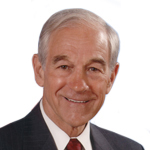
By Ron Paul
4

Ron Paul

One of the most enduring myths in the United States is that this country has a free market, when in reality, the market is merely the structural shell of formerly free institutions. Government pulls the strings behind the scenes. No better illustration of this can be found than in the Federal Reserve's manipulation of interest rates.

The Fed has interfered with the proper function of interest rates for decades, but perhaps never as boldly as it has in the past few years through its policies of quantitative easing. In Chairman Bernanke's most recent press conference he stated that the Fed wishes not only to drive down rates on Treasury debt, but also rates on mortgages, corporate bonds and other important interest rates. Markets greeted this statement enthusiastically, as this means trillions more newly-created dollars flowing directly to Wall Street.

Because the interest rate is the price of money, manipulation of interest rates has the same effect in the market for loanable funds as price controls have in markets for goods and services. Since demand for funds has increased but the supply is not being increased, the only way to match the shortfall is to continue to create new credit. But this process cannot continue indefinitely. At some point the capital projects funded by the new credit are completed. Houses must be sold, mines must begin to produce ore, factories must begin to operate and produce consumer goods.

But because consumption patterns have either remained unchanged or have become more present-oriented, by the time these new capital projects are finished and begin to produce, the producers find no market for their goods. Because the coordination between savings and consumption was severed through the artificial lowering of the interest rate, both savers and borrowers have been signaled into unsustainable patterns of economic activity. Resources that would have been used in productive endeavors under a regime of market-determined interest rates are instead shuttled into endeavors that only after the fact are determined to be unprofitable. In order to return to a functioning economy, those resources which have been malinvested need to be liquidated and shifted into sectors in which they can be put to productive use.

Another effect of the injections of credit into the system is that prices rise. More money chasing the same amount of goods results in a rise in prices. Wall Street and the banking system gain the use of the new credit before prices rise. Main Street, however, sees the prices rise before they are able to take advantage of the newly-created credit. The purchasing power of the dollar is eroded and the standard of living of the American people drops.

We live today not in a free-market economic system but in a "mixed economy," marked by an uneasy mixture of corporatism, vestiges of free-market capitalism and outright central planning in some sectors. Each infusion of credit by the Fed distorts the structure of the economy, damages the important role that interest rates play in the market and erodes the purchasing power of the dollar. Fed policymakers view themselves as wise gurus managing the economy, yet every action they take results in economic distortion and devastation.

Unless Congress gets serious about reining in the Federal Reserve and putting an end to its manipulation, the economic distortions the Fed has caused will not be liquidated; they will become more entrenched, keeping true economic recovery out of our grasp and sowing the seeds for future crisis.



Ron Paul:   View Bio  l  View Site Contributions
Free-Market Thinking :   View Glossary Description  l  View Site Contributions
Federal Reserve System :   View Glossary Description  l  View Site Contributions
Latest Daily Bell Articles
SHARE YOUR THOUGHTS
You must be a site member to submit suggested edits or post feedback. In addition to submitting edit suggestions and posting feedback, your Free Membership to The Daily Bell gives you access to our Member Zone where you will discover a plethora of other member benefits.
Want to learn more? click here
 
NOT A MEMBER YET?
Join The Daily Bell and take full advantage of the benefits TODAY:
MEMBER LOGIN:
USERNAME:
PASSWORD:
REMEMBER ME
LOST YOUR PASSWORD / USERNAME?
Showing 1 - 4 of 4 - Newest on top - Reorder Feedback
  Posted by laceja on 09/26/12 12:42 PM

mava, if you think the government will confiscate your land, but not your gold/silver, you're in fantasy land. I won't matter what is the value of gold/silver, relative to what you need to buy, if the gov't has confiscated it.

However, you are correct in saying we must learn to barter. The problem with that idea is, according to you (and I agree), the PTB will confiscate everything they can. That's why I say, it's important to get as remote as possible. Now, if you're in the states, it's very hard to imagine being able to get yourself that remote, but it's not all that difficult the further south or north you get. South is better, because you it's easier to stay warm.

  Posted by mava on 09/25/12 10:05 PM

laceja,

You are discounting what will happen with the prices of gold and silver. It sounds as if in your estimation, the prices of gold and silver will be the only prices that will be somehow excluded from "prices will rise to high and to rapidly".

Also, on your advice for self-sufficiency:
It certainly won't hurt to have one's own source of nutrition. But a source of nutrition is (as they say) "nothing to write home about". Those who will focus on self sufficiency, will find the meaning of an inefficiency of barter, together with lack of division of labor. In other words, one will spend his entire day and energy just to produce nutrition. This is the equivalent of working for 300 dollars a month, as this is about how much is required to feed oneself.

If he/she had already put away a significant capital in form of precious metal, then may-be self-sufficiency could be considered a way to spend time and to move from "now" to "tomorrow".

However, consider that a self-sufficient one will be an easy target of the crowds, and especially, the government. Either the land or the produce or both can and will be taken or, taxed, at best. Consider the cost of missed opportunity too.

  Posted by mava on 09/25/12 09:53 PM

Actually, Ron Paul is incorrect on this.
Interest is NOT the price of money. You can test this assumption yourself:

If I payd 100 dollars for gas, the gas is mine, I don't have to return it.
If I paid 100 dollars in interest, I still have to return full amount I borrowed.

Interest is a price for having certain amount of money for certain length of time. It is, therefore, to use a layman jargon, more appropriately, the rental rate of money.

Everything else Ron said, still stands, though.

  Posted by laceja on 09/25/12 08:39 PM

Frankly, I think it is already too late to recover.

Debt is so high now, when interest rates do rise, and they must sooner or later, the interest on that debt will far exceed income. It doesn't really matter whether you are personally in debt or not. Even if you have saved lots of money and already have converted it to gold or silver, prices will rise to high and to rapidly, the savings will be depleted very quickly. Only those, who are able to grow their own food and who live in a remote enough area that they won't be molested, will survive... with, of course, the exception of those who actually control the money supply. They will survive because, they are the ones who have the power of force to take whatever they want.

The only way I see to survive, at this point, is to have a refuge, where you can produce everything needed to sustain yourself and family.


ABOUT US ARCHIVE THINKTANK   MEMBER ZONE
Editor's Message
Terms of Use
Privacy Policy
Contact
News & Analysis
Editorials
Exclusive Interviews
Videos
Special Reports
Polls
Biographies
Glossary
Links
Books
MEMBER LOGIN
© Copyright 2008 - 2013 All Rights Reserved.
The Daily Bell is published by High Alert Capital Partners Inc.