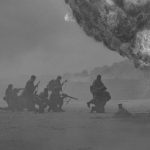
British have invaded nine out of ten countries – so look out Luxembourg … Britain has invaded all but 22 countries in the world in its long and colourful history, new research has found … Every schoolboy used to know that at the height of the empire, almost a quarter of the atlas was coloured pink, showing the extent of British rule. But that oft recited fact dramatically understates the remarkable global reach achieved by this country. A new study has found that at various times the British have invaded almost 90 per cent of the countries around the globe. The analysis of the histories of the almost 200 countries in the world found only 22 which have never experienced an invasion by the British … The analysis is contained in a new book, All the Countries We've Ever Invaded: And the Few We Never Got Round To. Stuart Laycock, the author, has worked his way around the globe, through each country alphabetically, researching its history to establish whether, at any point, they have experienced an incursion by Britain. – UK Telegraph
Dominant Social Theme: Albion is a peaceful isle.
Free-Market Analysis: It is not actually Britain that has been doing the invading but, apparently, the City of London. What this book doesn't tell you, or at least not the review, is the timeline of invasion.
Here's a speculation: The number of invasions and their seriousness picked up a good deal in the past 500 years after the invention of monopoly central banking.
It is not just that central banking gave Britain's elite the funds to go to war (tally sticks helped with that process, too) but also the coming of age of the British banking elite.
While there seems no doubt that elites generally influence society's culture and bellicosity, the emergence of a British super class likely dates back 300 or even 500 years, directly to the emergence of central banking.
British elites, using Money Power, did indeed reshape the world in their own image. Even the erection of Israel is a British elite gambit, along with the subsequent trouble Israel has caused. Here's some more from the article:
Only a comparatively small proportion of the total in Mr Laycock's list of invaded states actually formed an official part of the empire. The remainder have been included because the British were found to have achieved some sort of military presence in the territory – however transitory – either through force, the threat of force, negotiation or payment.
Incursions by British pirates, privateers or armed explorers have also been included, provided they were operating with the approval of their government.
So, many countries which once formed part of the Spanish empire and seem to have little historical connection with the UK, such as Costa Rica, Ecuador and El Salvador, make the list because of the repeated raids they suffered from state-sanctioned British sailors.
This excerpt points up that a country need not formally invade to have a military impact and subsequently a social one. These observations also buttress an argument we've regularly made: Resources are not an issue. The purpose of war is control not capitalist greed.
This is an important argument. It is a dominant social theme of sorts that wars in the modern capitalist environment are resource oriented. This goes along with a subdominant social theme that wars are the result of a capitalist mindset that seeks worker exploitation.
For instance, Iceland, we learn, was invaded in 1940 by the British "after the neutral nation refused to enter the war on the Allies side. The invasion force, of 745 marines, met with strong protest from the Iceland government, but no resistance."
Vietnam was invaded several times by the British along with Cuba, and it is not hard to make a case that, in our view, each of these invasions was initiated for mercenary reasons.
As for the "great game," we have doubts about that, as well. World domination is being consolidated as we write and thus the ebb and flow of military strategy may have little to do with oil or trade routes and a lot to do with the steady incrementalism of globalism.
Most of these countries were not so powerful as Britain. Spain and France could be seen as legitimate enemies but what country today can rival the combined might of Britain and the US? The stakes are very high today and this book does a service by reminding us of the scope and ambition of the Western-centric monetary elite.
Of course, we would have liked it better if Laycock had placed the responsibility for this bellicosity where it belongs – on Britain's banking elites – rather than on "Britain," whatever that is.
One can also make the argument that while Britain has been the chosen vessel of warfare, it is not Britain alone that has participated in this almost endless campaign of violence. European countries, too, have participated, and one could make the argument that all such participants are proxies for Money Power.
Still, Laycock has a point when he writes, "I was absolutely staggered when I reached the total. I like to think I have a relatively good general knowledge. But there are places where it hadn't occurred to me that these things had ever happened. It shocked me. Other countries could write similar books – but they would be much shorter. I don't think anyone could match this, although the Americans had a later start and have been working hard on it in the twentieth century."
This is a telling point, as well, as we have argued that in the 20th century, the US has become the country that has been utilized as the front-line invasionary force of globalism. The US's endless wars have been positioned any one of a number of ways but the reality is that they all serve to expand the power elite's globalist enterprise.
Laycock reportedly points out that some of the countries that have not been touched by the British military machine may actually have been exposed; he simply cannot find the records. Among the countries listed is "The Vatican" – so Laycock's point is well taken. The British, despite a long-ago royal apostasy, surely have influence over the Vatican just as does their US proxy.
The review adds the following, astonishing quote from Laycock: "On one level, for the British, it is quite amazing and quite humbling, that this is all part of our history, but clearly there are parts of our history that we are less proud of. The book is not intended as any kind of moral judgment on our history or our empire. It is meant as a light-hearted bit of fun."

It is humbling, perhaps, if one believes in military glory. It's certainly not fun.