MEMBER LOGIN  l  FREE REGISTRATION
The Daily Bell Newswire

Editorial

Monday, November 26, 2012

Capitalism, Socialism and Human Dignity

By Tibor Machan
6

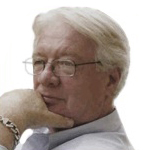
Dr. Tibor Machan

Capitalism means human individual freedom, especially in the sphere of striving to become prosperous. To defend the system is a challenge because of its ties to individualism, even ethical egoism. For centuries the ethical and moral guidelines people have been urged to live by have been some kind of communitarianism, such as altruism, utilitarianism, socialism, communism, etc. The individualism associated with capitalism had been thought as atomistic, seeing people as isolated from and indeed hostile toward one another.

Socialism is the political economic order that sees human beings as part of a larger entity, society, to which they are all beholden and which they must serve not of their own free will but as a matter of coerced duty.

The common sense appeal of communal systems as guiding human action comes from the historical need for collective conduct in the face of threats from groups that would overpower those who are vulnerable. (F. A. Hayek makes this point well in his works.) Once it turned out that individuals who unite of their free will provide better protection to the group, individualism began to gain support. It is better suited to human life, with individuals being the source of solutions to most problems.

In time individualism surpassed other schools of ethical thought, especially once it became evident that voluntarily choosing to be part of a group − tribe, clan, nation − ensured greater loyalty than is possible via coercive unisons.

It also became evident that all the talk about the need to unite and sacrifice for the group has served largely to secure power for a few over the rest. Thus individualism became more civilized, less primitive. As public choice theory suggests, efforts to serve the public interest usually come to no more than serving the interest of influential, powerful people at the expense of others.

Protesting about having to serve the public or community is difficult because the alternative, of serving oneself, the individual, seems to be arbitrary and self-indulgent. But today a sophisticated ethical (as opposed to psychological) egoism, such as what we find in David L. Norton's Personal Destinies, A Philosophy of Ethical Individualism (Princeton UP, 1976), can overcome all known objections to individualism. (See, also, Tibor Machan's Classical Individualism [Routledge, 1998].) This, however, hasn't reached popular consciousness. Iinstead, most people are schizophrenic and preach collectivism while practicing individualism.

The individualism or egoism forged most fully by Norton, as well as by Ayn Rand in her book, The Virtue of Selfishness, A New Concept of Egoism (1967), and others, stresses an Aristotelian idea of the human individual, not a Hobbesian one (which is found mostly in economics). An implication of this is that virtues such as generosity, kindness, gregariousness, etc., are entirely compatible with seeking to flourish as the human individual one is and self-interest is understood by reference to what is proper for a rational animal, not a beast driven to seek power over others.

This development, though not yet widely acknowledged, puts an end to the charge that egoism or individualism, as a central element of free market capitalism, must be a crass, anti-social viewpoint and must generate a social climate of mutual hostility and alienation.

When it comes to competition in the free market, for example, the model isn't the boxing ring, as widely assumed in caricatures of capitalism, but the marathon race! Thus, for instance, friendship would easily be seen as fully compatible with individualism, indeed, implicit in it. (See also the work of the philosopher Neera Badhwar for this.)

The dignity of the human individual is far more elevated than that of the human social animal as seen in socialism and other collectivist political regimes. The hallmark of this social-political outlook is that individuals come together voluntarily and aren't herded into communities by rulers or dictators.


Based on a lecture given at the Summer Leadership Academy, in Bercel, Hungary, Summer 2012. Tibor Machan is the R. C. Hoiles Professor of Business Ethics & Free Enterprise at the Argyros School of Business & Economics, Chapman University, Orange, CA 92866.


Tibor Machan:   View Bio  l  View Site Contributions
Selfishness / Self-Interest :   View Glossary Description  l  View Site Contributions
Latest Daily Bell Articles
SHARE YOUR THOUGHTS
You must be a site member to submit suggested edits or post feedback. In addition to submitting edit suggestions and posting feedback, your Free Membership to The Daily Bell gives you access to our Member Zone where you will discover a plethora of other member benefits.
Want to learn more? click here
 
NOT A MEMBER YET?
Join The Daily Bell and take full advantage of the benefits TODAY:
MEMBER LOGIN:
USERNAME:
PASSWORD:
REMEMBER ME
LOST YOUR PASSWORD / USERNAME?
Showing 1 - 6 of 6 - Newest on top - Reorder Feedback
  Posted by seer on 11/26/12 07:57 PM

Capitalism means human individual freedom,- FAUX.

  Posted by Bischoff on 11/26/12 07:07 PM

It is common to look at socialism as an economic system. The education establishment and the popular media compares capitalism with socialism and draws conclusions as to the merit of either. Then, when communism gets thrown into the discussion of economic systems, it gets to be really interesting.

I suggest that socialism is not an economic system at all. An economic system is named after the primary role which one of the three factors plays in the production of wealth. The three factors of production are "Land", "Labor" and "Capital".

"Slavery" is the economic system in which human "labor" is the primary factor of production. "Feudalism" is the economic system in which "land" is the primary factor, and "Capitalism" is the economic system in which "capital" plays the pivotal role.

A political economy, a term seldom used anymore, combines a governmental system such as "Dictatorship", "Oligarchy", "Democracy", "Anarchy" or a republican form of government with an economic system to describe the way a society is organized to provide for the procreation and survival of families and other groups.

Socialism is neither a form of government, nor is it an economic system. Socialism is quite simply a distribution system that rests to one extent or another on a government mandate to distribute the wealth produced. Therefore, you can have "Capitalism" and "Socialism" at the same time. As a matter of fact, most polital economies in the world today are of that kind.

The contrast to "socialism" as a distribution system is not "capitalism", but the "free market" system. The "free market" system was elevated and protected with the creation of the U.S. Constitution. The "free market" distribution system can only really function to its full potential with a republican form of government.

However, legal subversion of the provisions in the U.S. Constitution which guarantee a "free market" system were undermined when the separate states ratified the 16th and 17th Amendments in 1913. Subsequently, our monetary system was changed in 1935, and California changed its state's constitution in 1979 to severely damage the principles on which the "free market" system is based. California's Prposition 13 has led to severe consequences, both politically and economically throughout the United States.

What about "Communism"... ??? Communism is neither a form of government, nor an economic system, nor a distribution system. Communism is an ideology which attempts to replace "natural law" as the force which influences the survival of the human species. In this attempt, it combines the worst of the governmental system which is dictorship or oligarchy, with the worst of socialist distribution, where the distribution of wealth is almost totally madated by government. From all his pronouncements, I am convinced that President Obama holds a communist ideology, which finds its prescription for implementation in the writings of Marx and Alinsky.

  Posted by alexsemen on 11/26/12 04:11 PM

and so we have everyday wars and wars and again wars ... that is very OK with Mechan and his funny theoryies . QED !

  Posted by alexsemen on 11/26/12 04:08 PM

When ignorancy is used as argument ... ... seems to me never ending story.

  Posted by Jeanna on 11/26/12 11:45 AM

Socialism... the need of the collective over the individual... results in pitting individuals against each other. It devolves into dog eat dog. In the end nothing is left for the collective good. Which is about where we are in the US devolution. Is that a sign of hope?

  Posted by dave jr on 11/26/12 09:11 AM

It seems so simple. Wishing people weren't individuals will never make it so. Then, who can you trust? A friend who is there by choice, or one that is there by necessity? Free choice is civil. Socialism is an agent of destruction.

Excellent article. Thank you Dr. Machan.


ABOUT US ARCHIVE THINKTANK   MEMBER ZONE
Editor's Message
Terms of Use
Privacy Policy
Contact
News & Analysis
Editorials
Exclusive Interviews
Videos
Special Reports
Polls
Biographies
Glossary
Links
Books
MEMBER LOGIN
© Copyright 2008 - 2013 All Rights Reserved.
The Daily Bell is published by High Alert Capital Partners Inc.